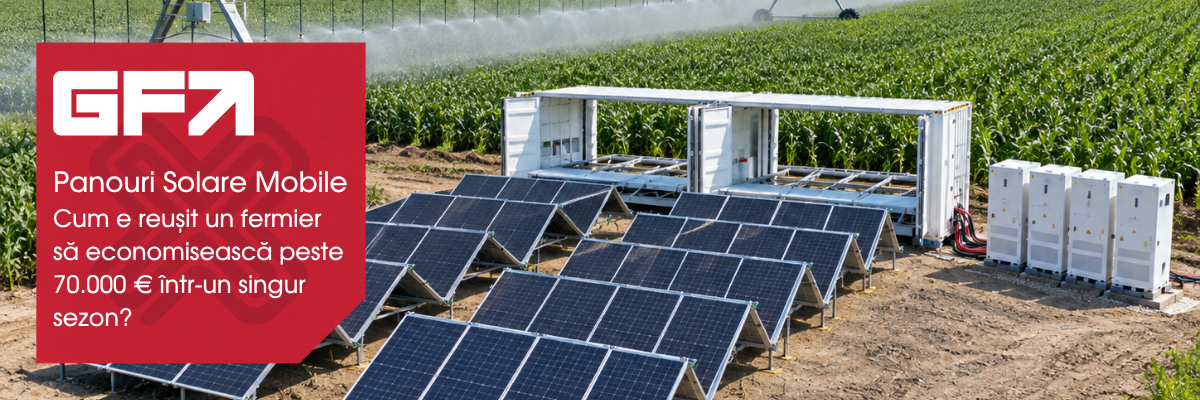
How to produce and store energy directly on the farm
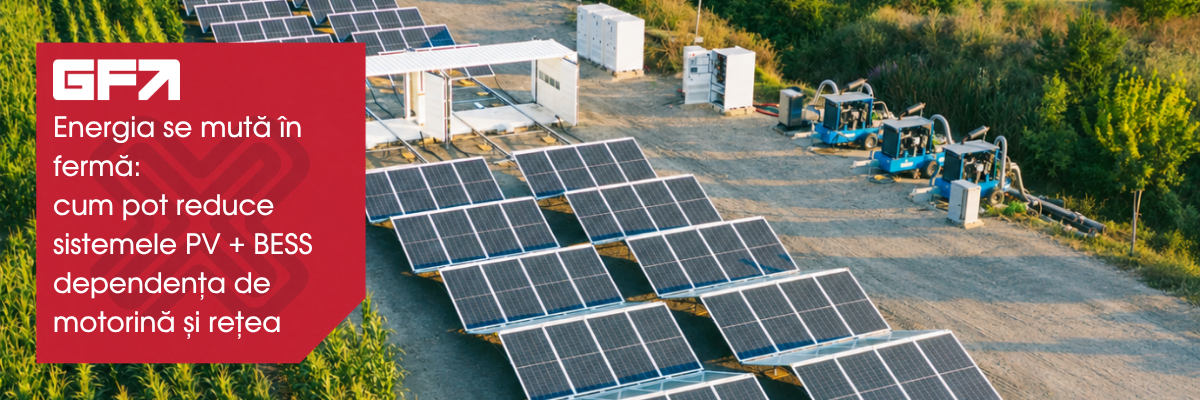
Mobile energy for the agriculture of the future
Every summer, the same problem repeats across hundreds of farms in Romania: irrigation pumps need to run longer, generators consume huge amounts of fuel, and bills rise along with the temperatures. NIK knows this reality well — for over 20 years, we have been introducing technologies that make field work more precise and efficient. From this year, the company has expanded its portfolio with a new solution: containerised, relocatable photovoltaic (PV) systems and battery energy storage systems (BESS), designed specifically for the needs of agriculture.
This is not just another "solar" offer. NIK handles the entire process: from sizing the installation and delivering the PV container and batteries, to integration with existing pumps and generators, energy management system (EMS) control, monitoring, and service. You have a single partner responsible for your farm's entire energy system.
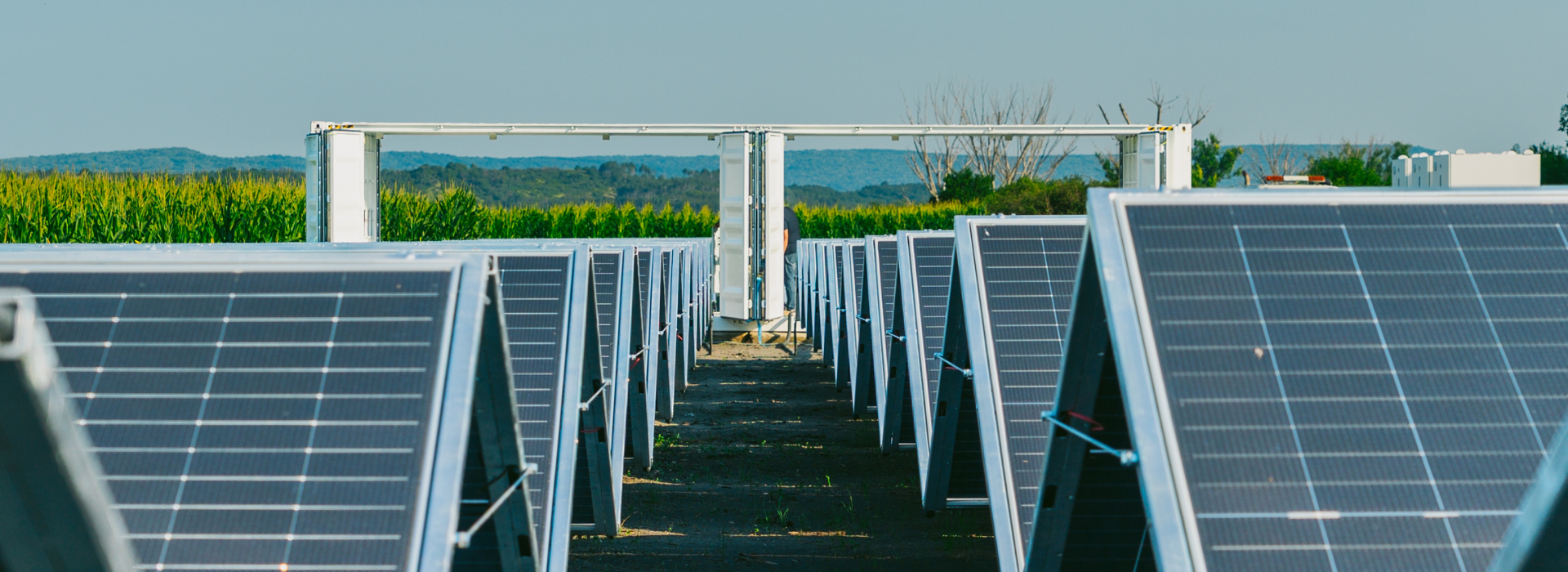
The problem every farmer knows
Diesel motor pumps and generators are expensive and temperamental — they involve constant fuel consumption, complicated logistics, and regular maintenance. Furthermore, more often than not, the electrical grid is simply non-existent in the fields. Seasonal irrigation peaks put extra pressure on the budget, exactly when it is most important to save money.
The solution: Your own energy produced directly on-site and a battery that covers night-time hours. The result is fewer operating hours for the generator, rapid relocation between sites, and simple scaling according to your needs.
How it works in practice
The solution is based on a perfect balance between energy produced and energy stored. Generally, the ideal ratio is PV : BESS ≈ 1 : 4 (i.e., 100 kWp of panels to 400 kWh of batteries). This ensures an energy reserve not only during sunny hours but also at night, early in the morning, and on cloudy days. Final sizing is always customised based on actual consumption, the season, and the specific requirements of each farm.
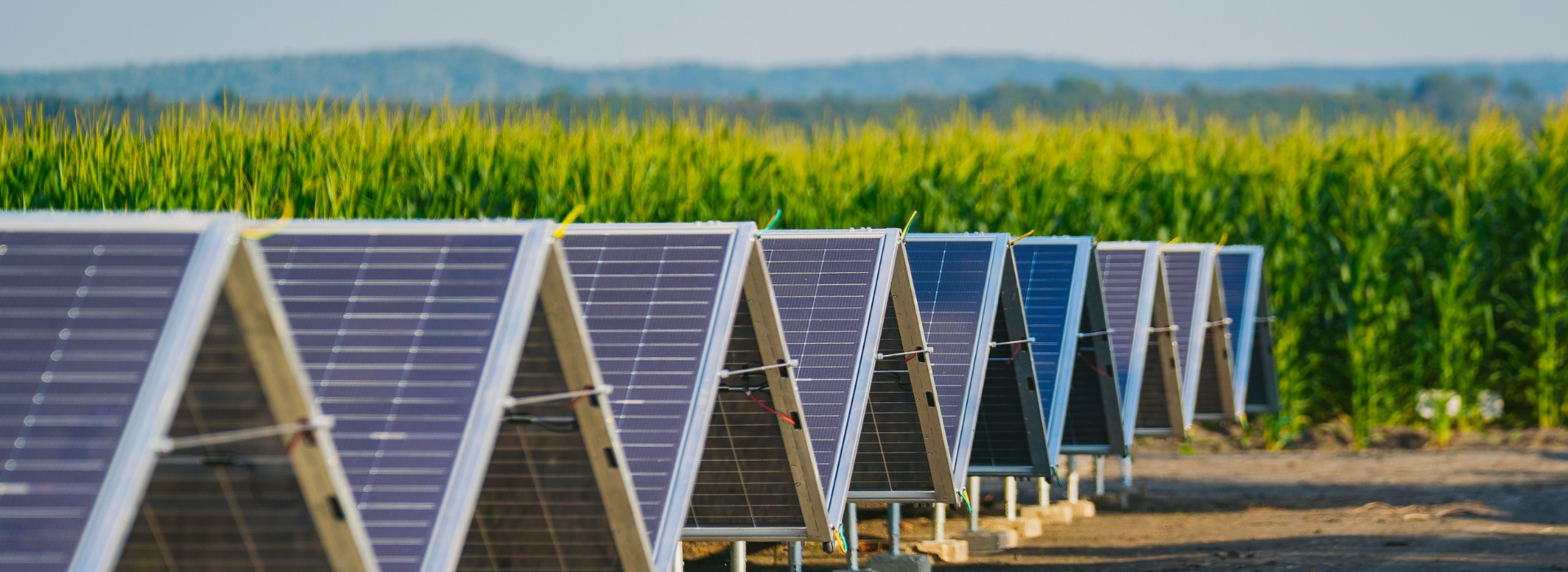
Primary application: powering irrigation pumps
The main benefit becomes evident where the financial impact is greatest: powering irrigation pumps. This translates into reduced costs, increased predictability, and minimal dependence on fuel deliveries during the peak season.
However, the system is versatile and covers a wide range of needs:
- Irrigation: pumps, boreholes, reservoirs, drip and sprinkler irrigation systems.
- Farms or remote locations: refrigerated containers, lighting, service containers, communication equipment.
- Seasonal operations: drying, sorting, mobile processing lines, and temporary power consumers.
- Hybrid systems: The electrical grid (where available) and the generator are kept as backup sources, running for fewer hours and in a much more efficient regime.
The figures that matter
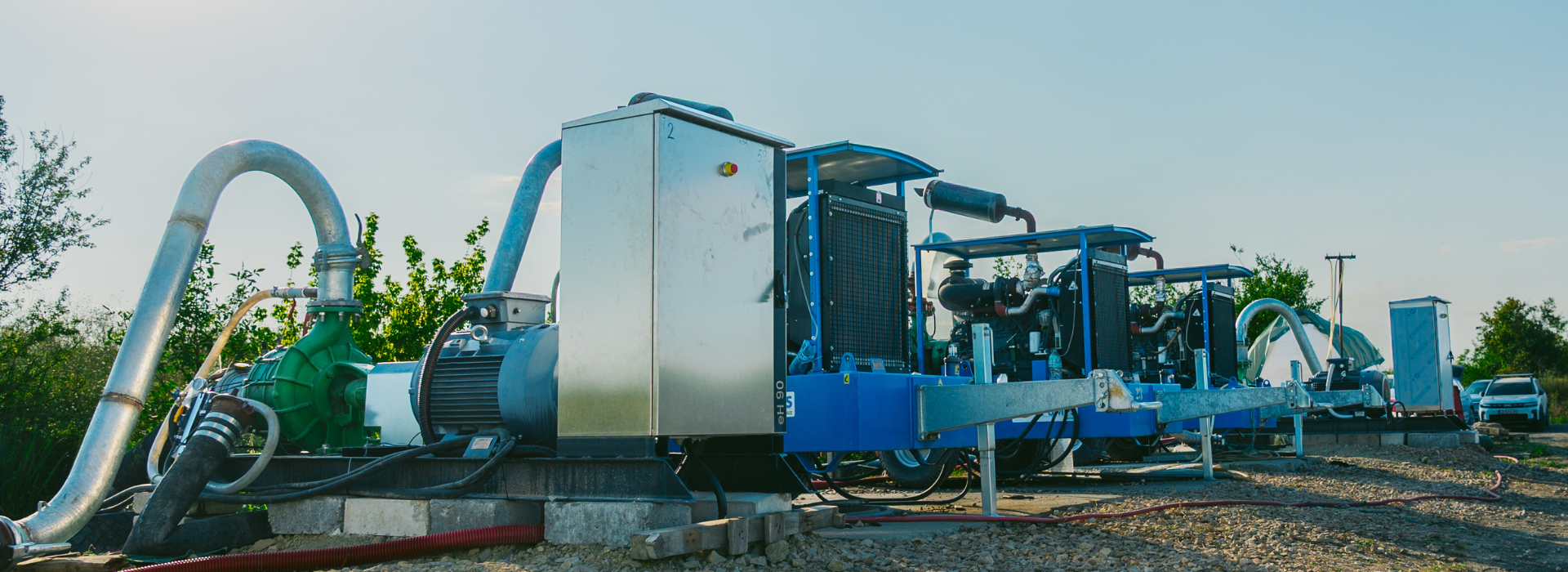
For a 50 kW electric pump running for 24 hours, the energy requirement reaches approximately 1.2 MWh/day. In the scenario analysed by NIK, a diesel generator sized for this load consumes about 340 litres of diesel in 24 hours. Assuming a minimum subsidised price of around 7.5 lei/litre, the fuel cost reaches approximately 2,550 lei/day, equivalent to about 2,100-2,200 lei for every MWh produced. To this, one must add the costs of maintenance, oil, filters, generator depreciation, and, where applicable, personnel.
On the photovoltaic production side, a 100 kWp system can produce approximately 574 kWh/day in August, and as a summer benchmark, 200 kWp can produce around 1 MWh/day. Thus, locally produced energy can replace a significant portion of the energy that would otherwise have to be produced by a generator or supplied from the grid each day.
Added value outside the irrigation season too
When irrigation demand drops, the system can continue to generate and manage energy. Under the applicable technical and contractual conditions, PV and BESS systems can be connected to the grid, and traded energy can reach up to 160 EUR/MWh in the evening during peak consumption periods.
The battery does not generate additional energy, but rather allows for the shifting of energy usage or monetisation to more advantageous times. Through the Energy Management System (EMS), the equipment can manage intelligent functions such as: self-consumption, peak shaving, load shifting, backup power, and—where the configuration and contractual framework allow—arbitrage on energy markets and balancing services.
Modular architecture — from a small farm to a large complex
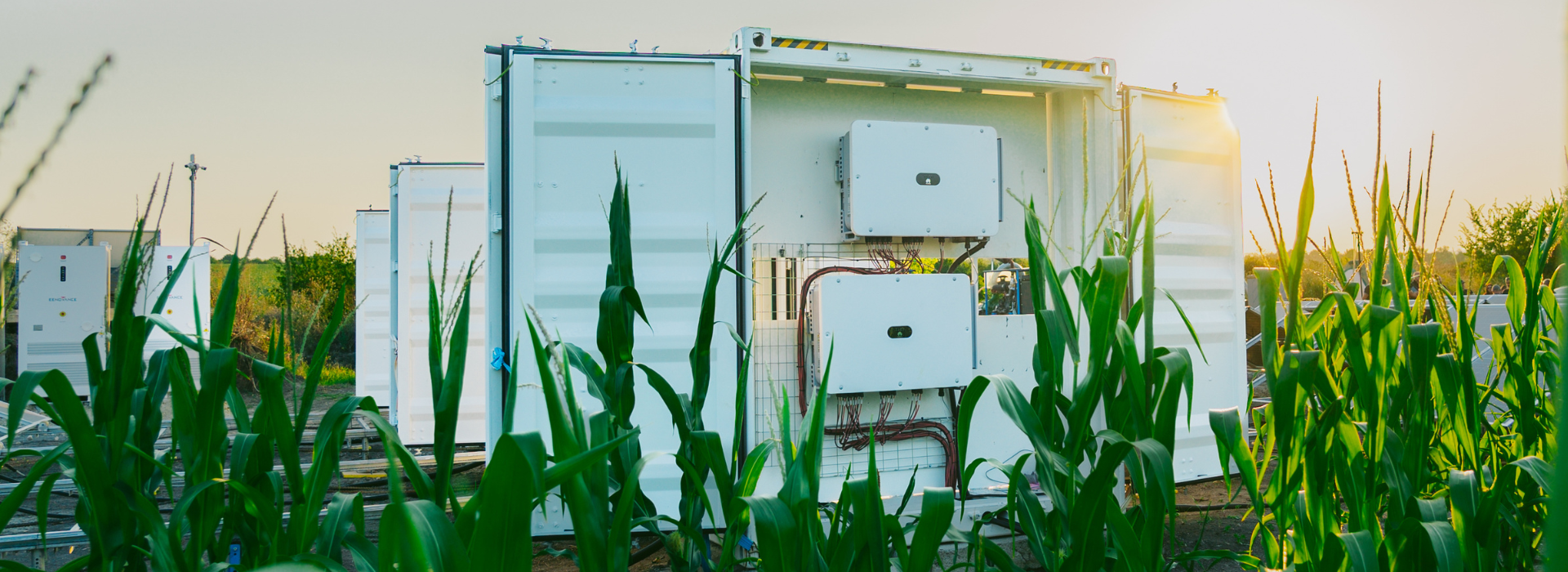
Relocatable PV containers come in several configurations, adapted to the scale of the farm:
- 12 FT — 20 kWp: basic solution for small pumps, work sites, and pilot projects.
- 20 FT — 103 kWp: mobile configuration with electric panel deployment and retraction.
- 40 FT — 206 kWp: high-power mobile configuration with electric panel deployment and retraction.
BESS storage solutions also have different individual power and capacity ratings, starting from 100 kWh / 50 kW and reaching up to 261 kWh / 125 kW, with scalability up to the megawatt (MWh) range.
The architecture integrates batteries, inverters, EMS/BMS, and protection systems into a robust industrial format, with simplified installation and the possibility of future expansion.
Why this is important for agriculture
NIK does not just sell "solar panels". NIK sells a functional energy system for agriculture — cheaper, more predictable, and relocatable energy, exactly in the season and place where you need it. The combination of PV, BESS storage, automated control, and integration represents a new, high-value-added product that goes beyond the simple sale of components. The model is replicable: the same architecture can be adapted to different pumps or agricultural objectives, with service, monitoring, diagnostics, seasonal configuration, maintenance, and capacity expansion ensured over time.
Are you interested in what a relocatable PV + BESS system would look like for your farm? Contact our team for a bespoke sizing based on your consumption, season, and location.
Note: The values presented in this article are indicative and intended to illustrate the potential of the solution. Concrete parameters — investment, payback period, and revenue — are determined individually, based on the actual consumption, usage profile, and location of each farm.
Contact us
Other articles
Variable rate fertilisation: how to achieve higher yields with less fertiliser